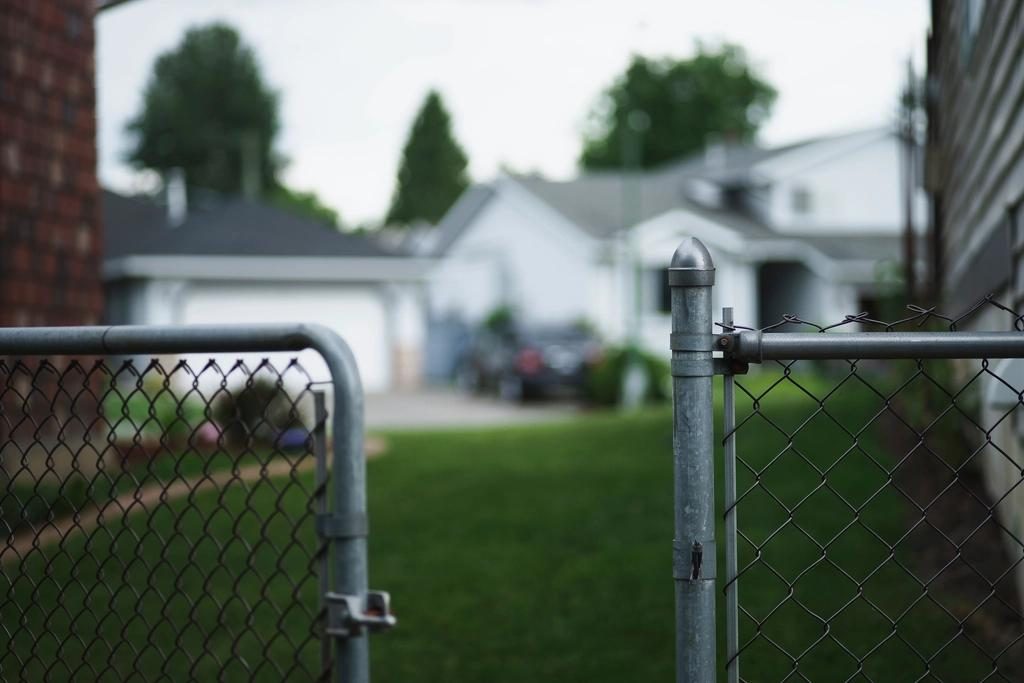
Chain Link Fencing in Texoma
Chain link is the workhorse fence: the least expensive way to enclose a yard, contain a dog, or secure a commercial lot, with a service life measured in decades and near-zero maintenance. In the Texoma corridor it’s the practical choice for larger residential lots, side and back property lines where privacy isn’t the goal, business perimeters, and acreage owners who want a durable dog yard near the house without fencing the whole parcel in cedar.
What’s typically included
- Galvanized steel fabric and framework, or black/green vinyl-coated for a quieter look
- Posts set in concrete, spaced and sized for fabric height and wind load
- Top rail, tension wire, and properly stretched fabric — a chain link fence is a tensioned system, and loose fabric is the mark of a rushed install
- Walk and drive gates, with drop rods and latches that actually line up
Options that matter
- Height — 4’ for front and side yards, 5–6’ for dogs and security, taller for commercial.
- Vinyl-coated fabric — black chain link nearly disappears against a tree line; the usual pick when looks matter.
- Privacy slats or windscreen — an economical privacy upgrade for commercial lots.
- Bottom tension wire or rail — the fix for dogs that push under.
Built for North Texas conditions
Clay soil movement affects chain link the same way it affects every fence — through the posts. Terminal and gate posts get larger footings because they carry the fabric tension; line post footings are sized for the soil, not a generic spec. Galvanized components shrug off North Texas weather; rust shows up only where cheap fittings were substituted, so we don’t substitute them.
What affects your price
Height and fabric gauge, galvanized vs. vinyl-coated, gate count and width (drive gates are the big line item), terrain and tree lines along the run, and teardown of existing fence. Long straight runs price better per foot.
Permits and practical notes
Chain link is commonly restricted by HOAs in newer Texoma subdivisions (usually allowed in back yards, prohibited facing the street) and city rules vary on height and front-yard placement — we confirm your city’s and HOA’s current rules before work begins.
Get a quote
Fill out the form on this page — or call or text us — to schedule a free on-site estimate.