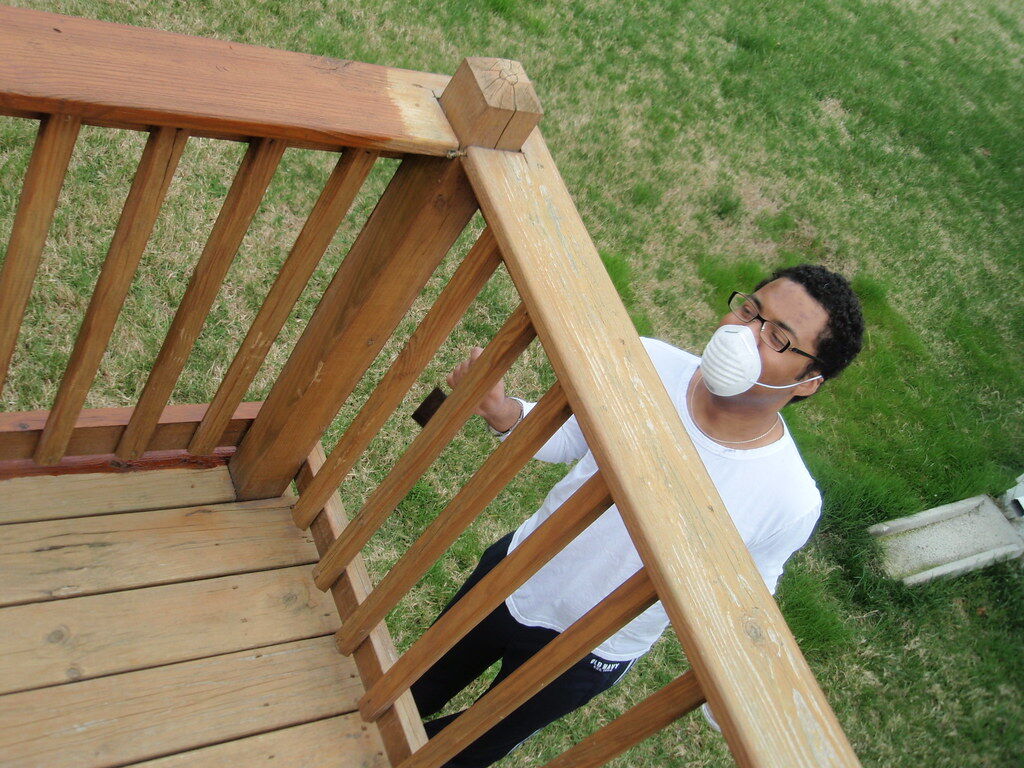
Fence Staining in Texoma
An unstained cedar fence in North Texas goes gray in a year and starts drying out, cupping, and splitting not long after. Staining isn’t cosmetic up here — it’s the maintenance that determines whether a $6,000 fence lasts eight years or eighteen. It’s also the fence service homeowners in the Texoma corridor search for most after installation itself, because every one of the thousands of cedar fences that went in with the recent building boom needs stain on a 2–4 year cycle.
What’s typically included
- Cleaning first — a stained-over-dirt fence fails early. Gray, weathered fences get washed (and brightened where needed) so the stain penetrates wood, not grime.
- Penetrating oil-based stain — soaks into cedar rather than forming a film, so it fades gradually instead of peeling. We use commercial-grade stain, not the big-box film-formers that flake in two summers.
- Trans-oxide pigments for UV protection — pigment is sunscreen for wood; clear sealers alone don’t survive Texas sun.
- Protection of your property — plants, stone, concrete, and your neighbor’s side masked or rinsed; overspray on brick is the mark of a careless crew.
New fence? Time it right.
Fresh cedar needs to dry before it can absorb stain — typically 30–60 days after installation depending on season. Staining too early wastes the stain; waiting a year wastes the wood. If we installed your fence, we’ll tell you when it’s ready.
Color and HOA notes
Most Texoma HOAs that require staining also specify approved tones — usually a natural cedar or medium brown range. We match approved colors and provide the product/color documentation your HOA asks for. Semi-transparent tones show grain and weather most gracefully; solid-color stains cover older discoloration but behave more like paint.
Re-staining cycle
Plan on every 2–4 years: sun-blasted west- and south-facing runs fade fastest, shaded lines last longer. A fence kept on cycle never needs the aggressive stripping and brightening that a neglected one does — maintenance staining is cheaper than restoration staining, which is cheaper than replacement.
What affects your price
Linear footage and height, one-sided vs. two-sided application, current condition (a gray fence needs cleaning/brightening a maintained one doesn’t), and access along the line. Most single-yard jobs land between $500 and $2,000.
Get a quote
Fill out the form on this page, or call or text us for a free estimate — footage and a couple of photos are usually enough for a close number on staining.