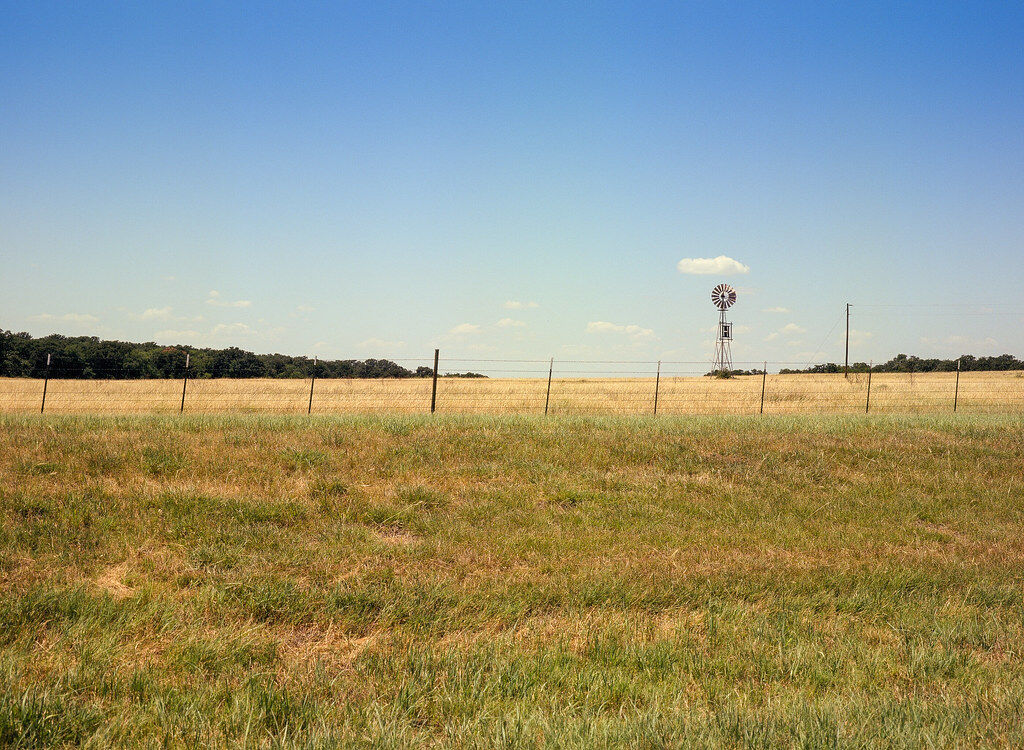
Pipe & Ranch Fencing in Texoma
Texoma isn’t just subdivisions — a huge share of Grayson County is acreage, horse property, and working cattle land, and that land needs a different kind of fence. Pipe and ranch fencing is its own trade: the materials, the welding, the bracing, and the stretch tension are nothing like a backyard cedar fence, and hiring a residential-only crew for a pasture fence is how you end up with slack wire and leaning corners in a year.
What we build
- Pipe fencing — welded steel pipe (commonly 2-3/8” drill stem) for perimeters, entrances, and arenas. The gold standard for horse property: no wire to tangle, no boards to break, decades of service life.
- Pipe-top with wire fill — pipe top rail and posts with no-climb or field wire below; the most popular horse-safe combination in North Texas.
- Cattle panel and barbed wire — 5-strand barbed wire for cattle perimeters, stays and braces done properly so the fence holds tension through seasons.
- No-climb / field fence — woven wire for horses, goats, and dogs on acreage.
- Entrances and gates — pipe entryways, cantilever and swing gates, cattle guards.
Why ranch fencing fails (and how we build it not to)
- Corners and braces carry the whole fence. A wire fence is only as good as its corner assemblies — H-braces set in concrete, sized for the pull of a quarter-mile stretch. Most sagging wire fence traces back to weak corners, not weak wire.
- Tension is a skill. Wire stretched by feel goes slack by the first winter. We stretch to proper tension with the right equipment.
- Welds outlast clamps. On pipe fence, welded connections beat bolted brackets in longevity and looks; our welds are ground and painted, not left raw to rust-streak.
- Clay movement affects ranch fence too. Line posts driven or concreted to depth appropriate for the soil, not a one-size spec.
What affects your price
Pipe fencing runs roughly $12–$30 per linear foot depending on rail count, pipe gauge, and whether it’s full pipe or pipe-top over wire; barbed wire and field fence run substantially less per foot, with corner/brace count and terrain (tree lines, creek crossings, rock) driving the real cost on large jobs. Long runs price better per foot than short ones — mobilization is a bigger share of a small job.
Acreage practicalities
Fences on unincorporated county land generally don’t need city permits, but boundary fences are worth getting right the first time: we recommend confirming the property line (survey pins or a fresh survey on older parcels) before setting corners. Texas fence law on livestock and boundary fences has real implications for cost-sharing with neighbors — worth a conversation before a shared-line project.
Get a quote
Fill out the form on this page — or call or text us — to schedule a free on-site estimate — we quote acreage jobs on site, not over the phone.